GIK Acoustics. Acoustic Panels and Bass Traps.

Join Our Email List
Email:  
For Email Marketing you can trust


GIK Acoustic Panels The standard acoustic panel size just will not fit? GIK is able to provide custom sized panels. Please contact us with size and quantity.
GIK Bass traps GIK can ship your acoustic panels and bass traps worldwide. Click here for more details.
GIK Acoustic Panels Need help with your acoustical room setup? Contact us here.
GIK Bass Traps 100% Money Back Guarantee!


How Diffusion Really Works. Spotlight on MASSIVE Mastering
January 15, 2009 Newsletter

GIK Acoustics

GIK Acoustics Presents
Acoustic Class Room

January, 2009 - Vol 1, Issue 1
          
In This Issue
How Diffusion Really Works
SPOTLIGHT:Massive Mastering
Join Our Mailing List!
Quick Links
          
Greetings!

Welcome to GIK Acoustics classroom!

From time to time we'll be sending out newsletters to all of you to keep you up to date on a variety of room acoustics topics. Our hope for this
newsletter is that it will help you get a better understanding of how
acoustics work and how you can benefit by treating your rooms. If you have any questions about the information in this (also ideas for topics to cover) or any other issue, please feel free to contact us. The more YOU understand the better YOUR listening environment will be.  Also we will be spot-lighting a room in each newsletter, so if you'd like to show off your room to the world please contact me at glenn.k@gikacoustics.com

Glenn Kuras
          
How Diffusion REALLY Works

Diffusion is a very misunderstood concept in the audio field. What exactly is diffusion? According to Webster, there are several definitions which relate to various fields. Let's take a look at the generic definition and one more audio related.

Diffusion: The movement of a substance from an area of high concentration to an area of low concentration.

Diffusion: In audio, the scattering of sound waves, reducing the sense of localization.

Those 2 definitions may seem to be very different but they really aren't. If we think of a series of sound waves bouncing off of a wall, they're concentrated and moving in the same direction at the same time. The reflections off of the wall will come back to the listener at approximately the same time and from approximately the same direction. The 'concentration' is still in tact in the spatial and time domains.

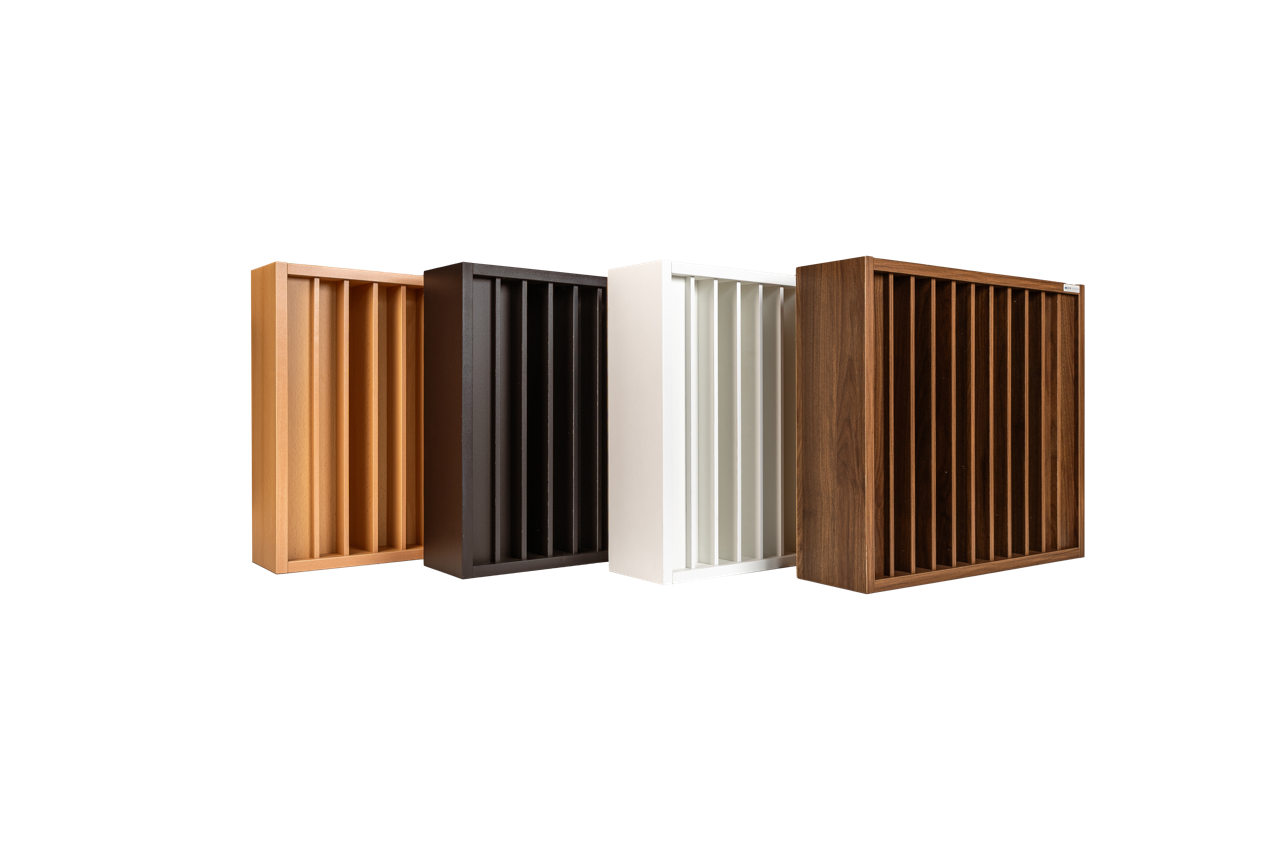
Now, if we introduce a diffuser onto that flat surface and we generate the same sound waves, what happens? Most people would say that we are scattering the sound in other directions rather than in the directly reflected path. This is true, but is not the whole story. A good diffuser not only changes the reflections to propagate in different directions, but does so EVENLY in all directions. Just splitting a wave to go into 2 directions doesn't do enough. We've effectively changed the concentration of the waves in a certain portion of the room. We've also effectively taken the intensity of the initial wavefront and split it among the various reflections so that each one is not only coming from a different direction, but each is also weaker and harder to distinguish but we've lost no energy in the process.

A proper diffuser also impacts the time domain. If we have the same wave and it gets reflected into multiple directions evenly, the length of the path the various waves must take to reach the listener also changes. In the world of sound, distance is time. For ease, we can say that 1 foot equals approximately 1ms of time. So, if we've changed the path into say 8 different paths (in reality, there are many paths but we'll look at 8 just for ease of understanding), each one ideally with have a different path, which means that they'll arrive at 8 different times. Again, we're diluting the concentration of sound but this time in the time domain instead of spatially. In addition, these different path lengths cause differences in the number of reflections and the amount of air the wave passes through which will cause each reflection to have a different intensity (more dilution in yet another domain - intensity).
So, now we have 8 reflections that have been changed and are all different in 3 domains - time, direction, and intensity. This makes it much more difficult for our ears and brain to determine exactly where the sound is coming from. This fits perfectly the definition of a lack of localization. The net result of this is that we trick our brain into thinking the room is larger that what it is and yielding a more spacious sound.
There are a great may myths about 'home brew' ways to provide diffusion. Most do not work at all and many work poorly or only over a very narrow range of frequencies. Let's take a look at one - a bookcase with books set at randomly varying depths.

First of all, books, if anything will be more absorbtive than reflective at all but the highest frequencies. Second, random depths do not generate random reflections over a predictable and controllable area. The width, height, spacing, and pattern of the wells of a diffuser are carefully calculated to make sure they generate a smooth and even scattering of the waves over optimally a 180 degree angle. Third, without the careful calculated spacing, we can cause frequency related aberrations due to constructive and destructive wave interactions from various reflections. We're in effect getting very little of the benefit of a diffuser while causing more issues in the frequency response.

Another myth is using CD/DVD cases or LPs in the same sort of random manner. In addition to the issues presented above, the cases themselves are so narrow that the frequencies that would be affected would be only in the highest ranges. Again, the width, depth, and pattern of the wells and peaks of a diffuser not only generate the proper diffuse pattern, but also determine the frequency range over which a diffuser is effective.

Frequently Asked Questions:

Q: Is it true that I have to sit far away from diffusion to make it work?

A: Well, yes and no actually. You need a certain amount of distance between the listening position and the diffuser to allow it to do its job. The closer you sit, the less chance the waves have to move farther from you and the less
difference there is in the timing that they reach your ears. They'll still have some effect but not as much.

Q: Is it true that you need to have a large room for diffusion to be effective?

A: Again, yes and no (seeing a pattern here? Every room is different). Normally, in a smaller space, one needs proportionately more absorption for bass control than in a larger room. This leaves less space for diffusion - not to mention the issues raised in the first question. However, diffusion can still be effective up high in the room to assist in killing slap echo and controlling the 'zing' in a room - especially a tracking room.

Q: What is the best place for diffusors?

A: This really depends on the situation and what you're using the room for. Diffusion can be used up high in a room to kill slap echo, in the rear of the room along the side walls, in place of absorption on the ceiling, etc. The most common place to see diffusion in a studio environment is on the rear wall. However, many times, you'll benefit more from absorption there to kill a strong bass null off the back wall.

Q: How would these help in a live tracking room?

A: In a live room, we want it to be as the name implies, relatively live. But, we still need to get it under control in terms of decay times. We also want to get that 'big' sound. Diffusion can help to eliminate echo and produce a nice large sound without killing too much of the livliness. It does so by spreading the sound, causing it to move through more air and bounce off more surfaces which decreases the intensity of the sound. For decay time control, diffusion is normally used in conjunction with broadband absorbtion. 
SPOTLIGHT: Massive Mastering - John Scrip
MASSIVE Mastering bridges the wide gap between mastering suites that can cost hundreds of dollars per hour and project & demo recording studio mastering setups.  The vision of former JEM Music Complex chief engineer John Scrip, MASSIVE Mastering provides artists an affordable, yet professional quality dedicated digital audio mastering alternative.  A clientele from across the USA and several countries around the world trust their CD premastering to MASSIVE MasterinJohng.

We sat down with John and ask him a few questions.

Q. So John what projects have you been working on lately?

It's coming up on dance show season, so a big increase in editing and compilation.  Other than that, name it - Rock, pop, classical, country, gospel - I've been working on spoken word projects from [ABC Radio's] Paul Harvey, a constant stream of live tracking / mastering from the Schaumburg Youth Orchestra - What a great bunch of kids and a great program that Schaumburg [IL] put together.   Not your typical "school" orchestra - Several international tours, they're actually performing at [Chicago's] Orchestra Hall this summer.  

Lots of international work with the dollar flipped around also, which is great.  This - let's call it a "classic metal" project from New Zealand stands out for some reason - Sonic Altar - If you get a chance and you're into straight-up, fast-driving, Harley riding rock, you'll be hearing from them soon I'm sure.  Young "kids" for lack of a better term - but very polished.  

I'm seeing a trend here - Maybe the talent isn't really getting younger but I'm just getting older...   Lots of stuff from the smaller indie labels too - The larger labels seem to be stepping very carefully with the economy and the indies are going to take over if they don't watch out.  But hey, that's fine.  Some of the cooler stuff I've worked on recently was on those aggressive indie labels that really believe in what they're putting out - Stuff that a lot of the majors wouldn't want to take a chance on. 

Q. So it's not just putting CD's together -

That's most of it, sure - But editing and compiling [performance discs] for professional dance companies - especially ones that have tried to do it themselves with less than wonderful results - Vinyl transfers - I just started with that last year.  Neat stuff sometimes when you get this record in that's the last known remaining unopened copy and the master tapes were lost decades ago or what not.  Tape transfers too.  Sometimes they just want a flat transfer to digital from tape. 

Typical mastering makes up the bulk, but those "related" projects break up the monotony nicely. 

Q. What equipment do you find is "most important" for today's mastering engineer.

Same as it's always been - Monitoring and acoustic control.  I know a lot of people are fond of the old "There are no rules in audio" adage, but either they have no idea or they have wonderful monitoring in a great space.  There are *two* rules I can think of right off the top of my head -- One is that you will only ever hear as well as your monitoring chain allows you to.  The other is that your monitoring chain will only ever be as accurate and consistent as your room allows them to be.   Put the guy with the greatest hearing in the world in front of cheesy speakers and he's not going to be able to do much...    Put him in a bad room and he's going to be taking a best guess.  An educated guess - but a guess nonetheless.   That sounds like Dr. Seuss... 

But the stuff with the knobs on it - "today's mastering engineer" has to be really picky.  The demands are so high and the budgets aren't what they used to be - but the gear hasn't come down in price.  So you have to make sure the gear you choose is going to work well with almost anything.  I have several pieces that I use for "this" sound or "that" sound - When you need a [Manley] Vari-Mu, there's no substitute.  When you want that SSL mix-buss sound, you need that sound.  But you need a "bread and butter" chain that will take on anything you throw at it.  And ever since my first piece of Crane Song gear [the STC-8M compressor], I've added Crane Song to every part of the chain - I have their compressor, the IBIS [Stereo EQ], the HEDD 192 [AD/DA converter] and the Avocet [monitoring DA and controller] calling the shots on the whole thing.  I'm convinced that they can just do no wrong, sonically speaking.  I even had a Flamingo [stereo mic preamp] here for a time - I won't bore you with the details, but I'll tell you - If that thing had stepped controls and line-level inputs, I'd be running mixes through it right now.   True story - I was running mixes through a Flamingo to see what it could do - And don't think I didn't have a long discussion with Dave [Hill] about modifying one at some point.  Great, great stuff though - If I suddenly had to get rid of everything in the chain that didn't say "Crane Song" on it, I wouldn't really find it a compromise. 

In any case, Crane Song, Manley, API, BelCanto, the hot-rodded SSL 4000 clone - It's all ridiculously clean, very quiet stuff with gobs of headroom.  And with the demand for volume at this point in time - as much as I wish it weren't the case - without a lot of headroom, you might as well just throw it away. 

Q. What is the biggest problem you come across these days with mixes being submitted to you?

Too much.  Too much going on, too many effects, too hot on the way in - Too much volume.   A lot of "less seasoned" engineers are convinced that if they don't make everything as loud as possible right off the bat, then the finished product isn't going to be loud.  Loudness aside, it's the perfect way to make sure that it won't have the potential to *be* loud when it's done.  So they track too hot and overdrive the input chain right off the bat and it just goes downhill from there.  If people would pretend that -12 [dBFS] was as hot as anything should go during tracking, their recordings would sound so much better.  And at the mastering stage, they could actually get that volume they want while still retaining some clarity and dynamics. 

That and the trend to "fix it" at the mastering stage.  Some will send in mixes that they're not happy with hoping that I can "fix" them here and it just doesn't work that way.  Ask any mastering engineer - We'd much rather "enhance" a great recording than try to make a bad recording "less bad" - If it's even possible in some cases. 

The funny part of that whole situation is the experience of the engineers in some cases - I'll get in these great sounding projects that are obviously "safe" but very decent sounding from hobbyists that have been at it for less than a year.  I'll get great sounding projects in from engineers who have been full-time industry pros for a decade or more.  But the most problematic projects tend to come in the middle - It's like the "rookies" haven't learned enough to screw anything up, the pros have learned how to get out of the way.  But a lot guys in the middle are the ones with enough rope to hang themselves with.   You know how you learn something new and then you have to do it all the time?  Or you get that new piece of gear that's suddenly never turned off?  Turn it off once in a while.  Get back to the basics - Get the core sounds sounding as amazing as you can, then just get out of their way.   Track at "normal" levels - not "as hot as you can without clipping."  Go ahead and record 5 vocal tracks but you don't have to use them all if the mix doesn't need it.  Use reverb, but once you actually notice it, you're probably using too much.  You can always add more later if you actually need it.

Q. So tell us a little about your room? How are you set up and what kind of acoustics do you have?

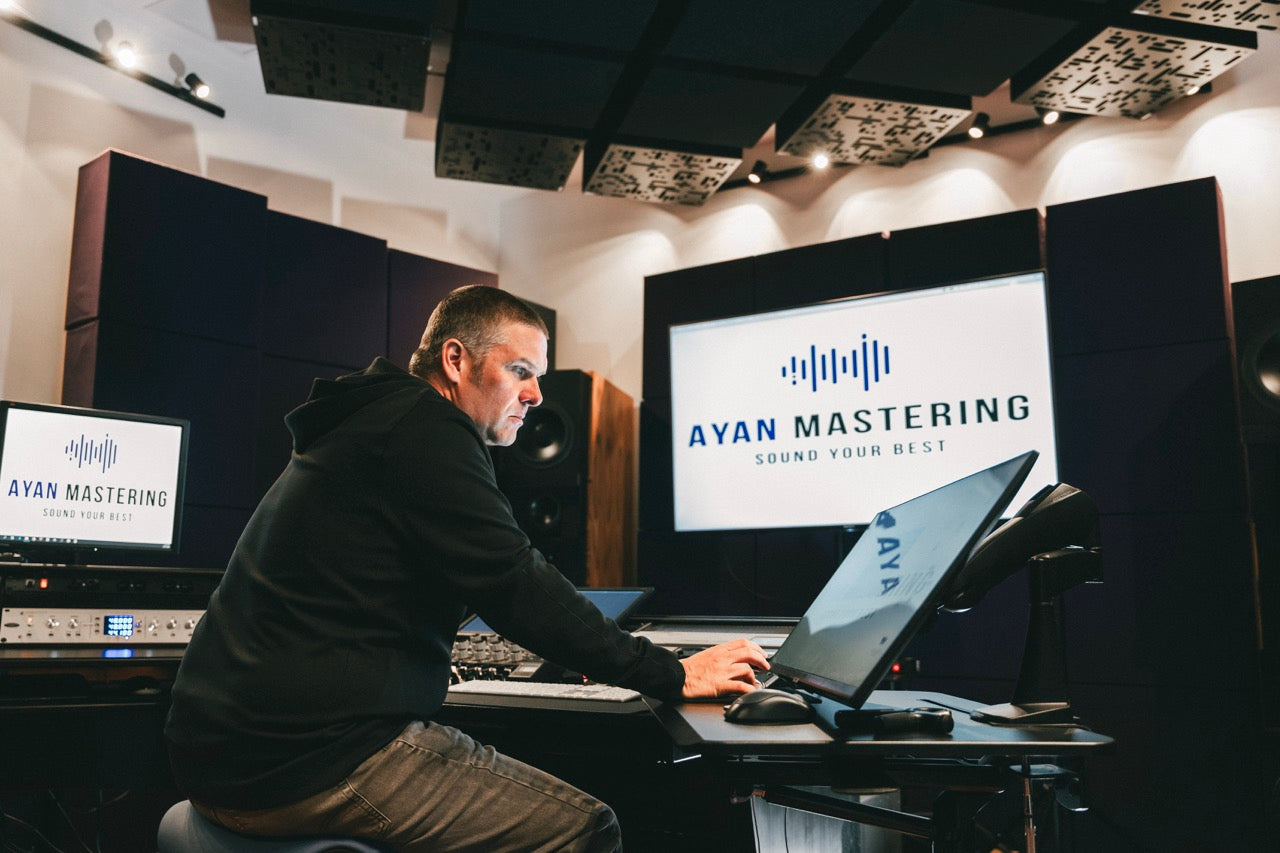
I was limited by the existing space quite a bit so took parts of two different rooms and made this one.   It's relatively small, so I knew it was going to need a lot of broadband trapping right off the bat.  I think I started out with 18 traps from you guys then added some custom units and fortified the corners [with GIK Tri-Traps] - I think I'm up to 29 or 30 traps in here now including the clouds.  The floor is floating above concrete except for the front of the room where there's a concrete slab right under the wood flooring where the speakers are.  The walls are doubled-up with compressed insulation and 1-1/2" of plaster on both sides so transmission isn't a problem. 

The last time I had the room shot, we noticed a little comb-filtering from the desk to the ceiling above, so I decided to add a couple [GIK D1] diffusors overhead - I know that's not exactly what they were designed for, but it really made the difference - Opened the high end right up and tweaked the imaging above the [desk] rail better than I would've expected.  So it's really well-controlled, but it's not dead - I hate dead rooms.  

CONTACT INFO: MASSIVE Mastering
P.O. Box 68143
Schaumburg, IL 60168
USA
Owner / Engineer:  John Scrip
Office Manager / Booking Coordinator:  Bridget Shepley
Phone (direct studio line):  1.630.237.4393
Fax (office/studio fax):1.630.233.8310
 
http://www.massivemastering.com 

Bringing Your Sound to Life.
 
Sincerely,
 
Glenn Kuras
GIK Acoustics
 
Save 5%
If you live "across the pond" and wish to order the GIK 242s, GIK 244s and/or the GIK Monster Traps you can save hundreds of dollars in shipping costs by ordering through our new GIK Acoustics Europe shopping cart.  If you act now you will also receive an additional %5 Savings! Click HERE for details.
 
Offer Expires: January 31, 2009
Safe Unsubscribe
This email was sent to ak@narrows.com by glenn.k@gikacoustics.com.
GIK Acoustics | 3065 McCall Dr, Unit 8 | Atlanta | GA | 30340
 

Back to Top


Copyright
© 2010 GIK Acoustics. All Rights Reserved.