


Acoustic Room Design. Your Way.
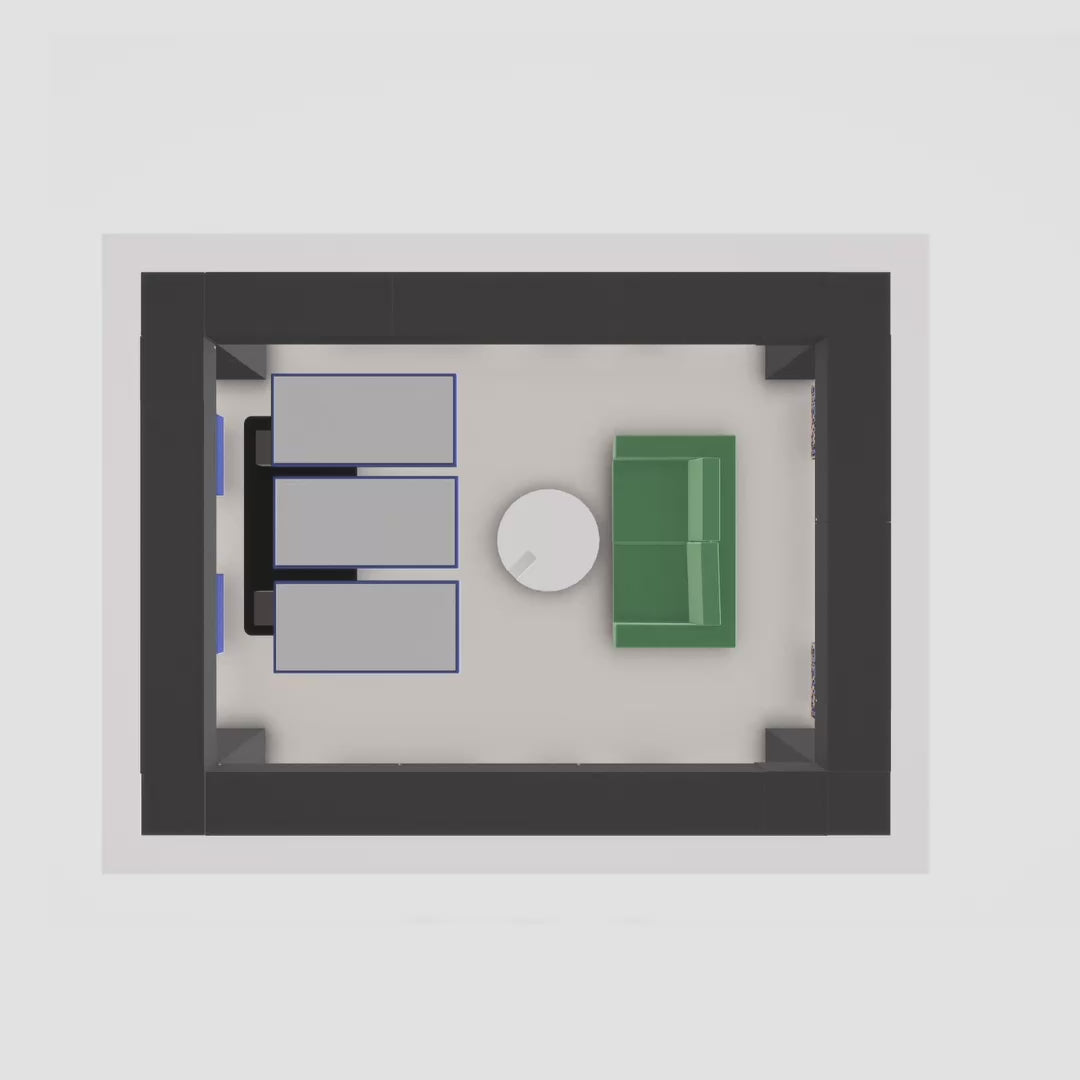
Our 3D Visualizer is a powerful 3D drawing and acoustic design tool that lets you build your room from scratch or choose from pre-designed templates to start customizing immediately. This tool supports realistic modeling of your space, helping you make informed decisions about placement, room treatment options, and color schemes.
Using the GIK Acoustics 3D Room Acoustics Visualizer
This tool works for rooms of any size, even small rooms or large rooms with high ceilings.
Choose a room plan
Start from an existing template or create your own custom room design. If you draw a room from scratch, it’s usually best to draw a box first, then enter the exact dimensions for the walls.
Place Products + Experiment
Add acoustic panels, bass traps, and diffusers directly into your drawing. Adjust placements to see how different configurations look and how they affect sound.
Share Your Design with a GIK Designer
Submit your plan through our Advice Form, and our experts will provide recommendations to fine-tune your treatment strategy for optimal results.
Why Room Acoustics Matter
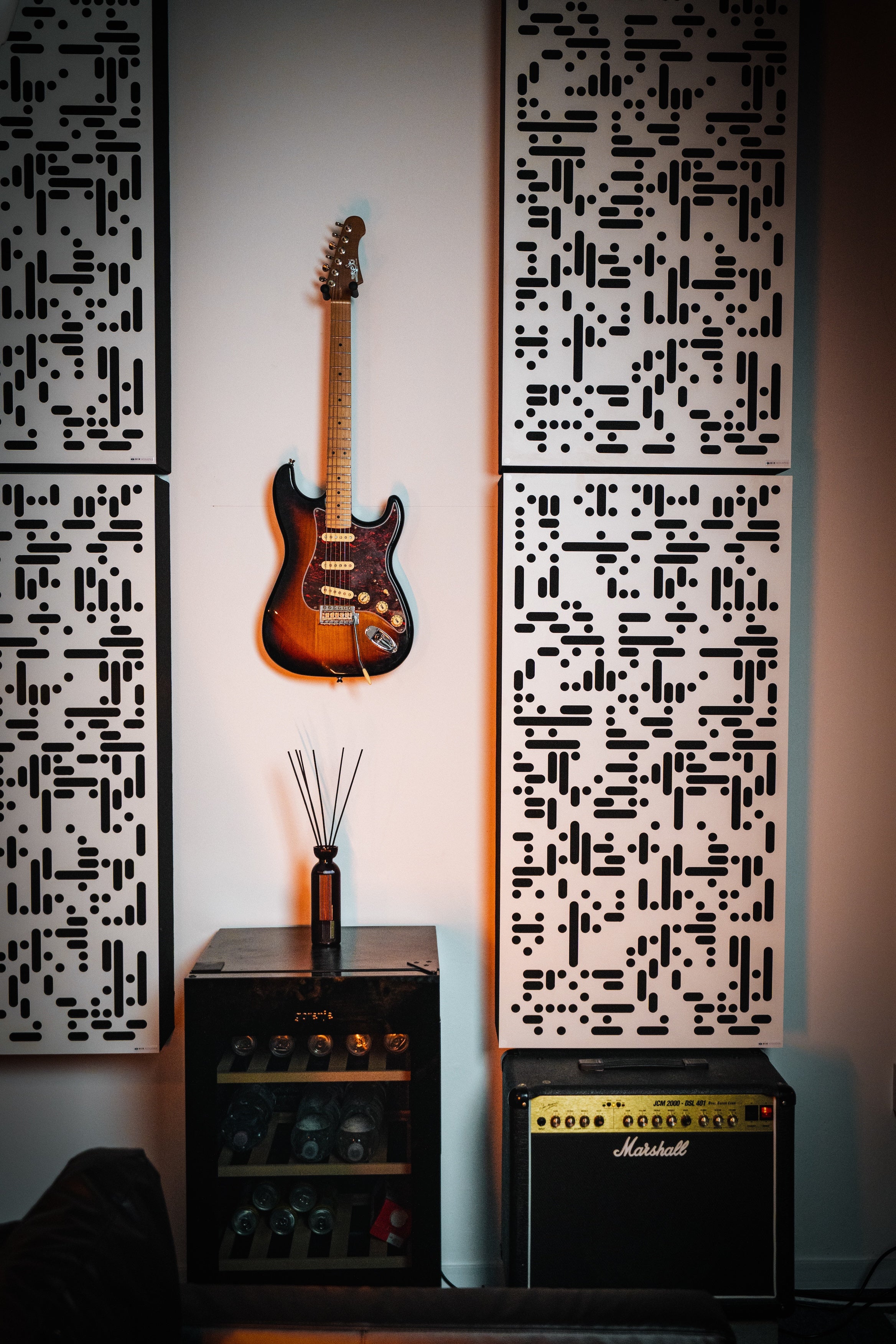
Poor room acoustics can distort sound waves, creating harsh environments that are unpleasant to spend time in, let alone listen to or produce quality audio. The room's acoustic properties create unwanted resonances, introduce reverb and flutter echoes that degrade room sound quality, and cause other problems. Proper acoustic treatment absorbs, diffuses, and balances frequencies to reduce reverberation and early reflections, ensuring a more natural and controlled listening environment.
With our 3D Visualizer, you can visualize the acoustic solutions and strategically place acoustic panels, bass traps, and diffusers in your space, to see what improving sound absorption, diffusion, and frequency response in your room’s size & shape will look like.
Designing Your Space: Key Considerations
If you’re lucky enough to be building a new DIY room from scratch, then designing it with the 3D Visualizer allows you to consider fundamental room design principles that impact room acoustics and sound quality. It’s great for any type of room, from control rooms to listening rooms, from home theaters to conference rooms, and even just large, reverberant rooms that need better sound for non-critical audio applications.
Room Shape & Dimensions
Avoid having two dimensions that are identical or even multiples of each other, as this can cause standing waves and uneven bass response to line up at the same or similar frequencies. For a deeper dive, consider room ratios. Aim for room proportions within the “Bolt Area”—a set of ideal room ratios that minimize acoustic distortions.
Listening Position
The ideal listening position is typically about 3/8 of the room length from the front wall, but it’s always best to experiment. Typically, if you are listening at the ½ point along the room’s length, you will be in a bass null, so it’s best to be a bit forward or backward of that point.
Door & Window Placement
Keep doors and windows at least 18 inches away from corners to ensure there’s space for bass traps, which are essential for low-frequency control.
Speaker Placement
Experimentation is always best, but in general, we want speakers to be in an equilateral triangle with the listener’s head, and either as close to the front wall as possible, or at least 3-4’ away to minimize SBIR issues.
Early Reflections
Make sure that the early reflection zones on the side walls and ceiling between the loudspeakers and the listeners will have plenty of room for treatments, to keep the balance between direct sound and reflections optimized, and achieve good room acoustics. While this strategy mainly addresses midrange and high frequencies, using thicker panels here as well for more bass trapping yields a better overall room. You can’t have too much bass trapping.
Room Comfort & Usability
While it's essential to get the audio-relevant details of the room set up correctly, we also want to ensure the resulting space is functional and comfortable to spend time in. The 3D Visualizer allows you to work out these details in advance.
FAQs
What are the benefits of using the 3D Visualizer?
The 3D Visualizer removes the guesswork from acoustic treatment planning. You can see how treatments look in your space, experiment with placement, and fine-tune configurations before purchasing. It’s not necessary! We can still help you even if you don’t use this tool, but for those who enjoy visualizing and experimenting with layout this 3D Visualizer is invaluable.
What should I prioritize when treating my room?
Our Design Team will walk you through the various options, but all rooms benefit from bass traps in corners to control low frequencies. If it’s a listening or recording room, add broadband absorption panels at reflection points for clarity. If you’ll be installing more than a few panels, then sometimes it’s worth considering diffusers to maintain a natural sense of space. For good room acoustics design, it’s often best to begin with these on the rear wall, so the speakers fire directly into them.
Can I use the 3D Visualizer for any room size?
Yes! Whether you have a small home studio or a large auditorium, the tool adapts to your needs, allowing for a custom setup tailored to your room dimensions and layout.
How do I submit my 3D design for expert review?
Once you’ve created your layout, you can export your design and submit it through the GIK Acoustics Advice Form. Our acoustic experts will analyze your room and recommend optimal sound-absorbing and diffusion solutions.
What if I’m building a room from scratch?
If you’re designing a new space, consider:
- Keeping room dimensions not closely related to each other to reduce resonances.
- Placing doors and windows strategically to leave space for acoustic treatment in the most critical spots.
- Make sure the layout results in a room you enjoy spending time in.
- Be clear about the soundproofing strategies you plan to deploy to keep sound from leaking in or out of the room. These strategies will require additional space in the room to implement correctly, so prepare for that.