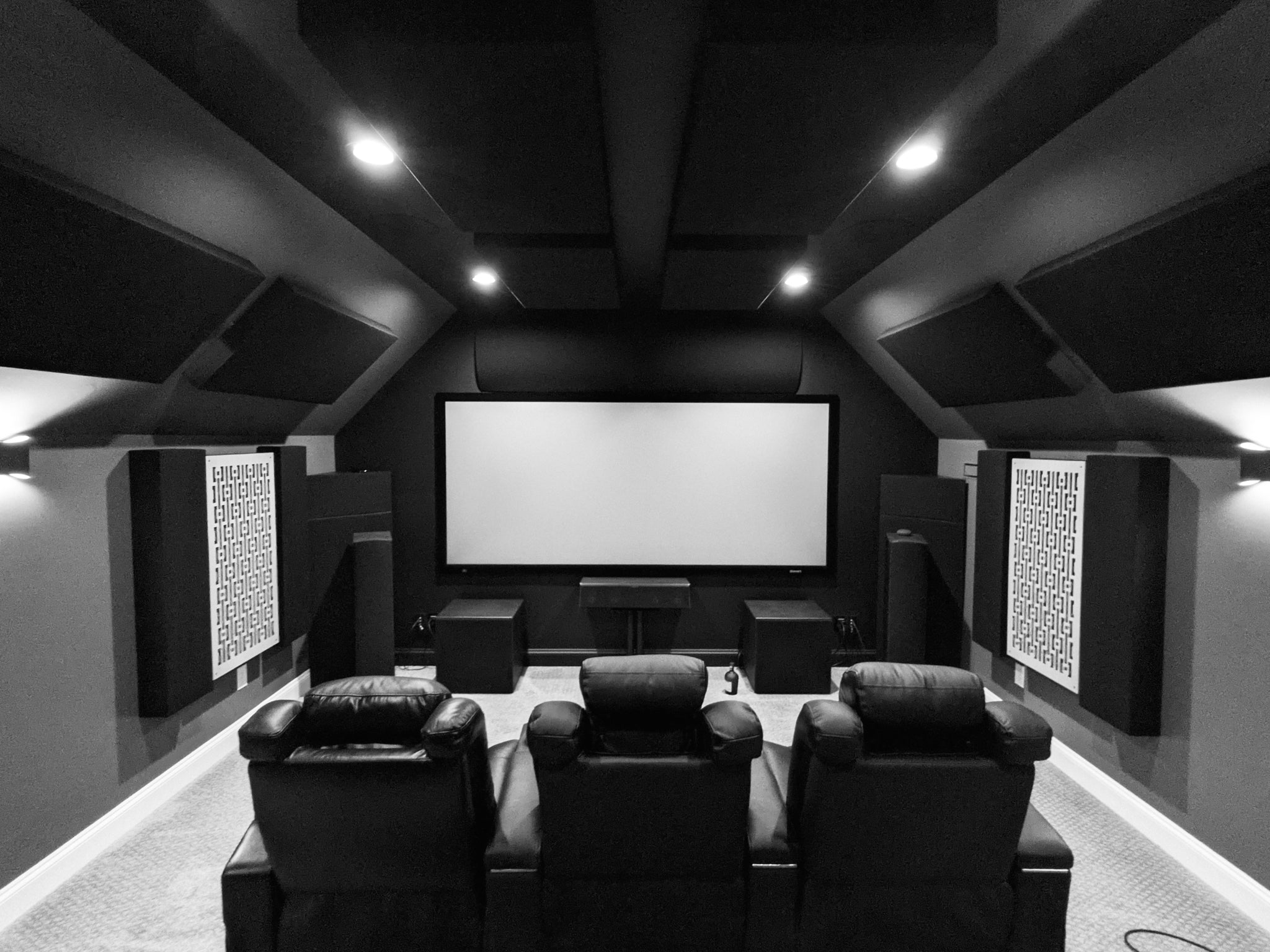
Pick the right GIK Product

No one room is going to be the same, so we have created many options for treating several types. Introducing the Acoustics Comparison Tool, a guide to help you decide. You can filter, search, and compare, and when you’re done, you can even print. 

We are committed to making sure you have the best tools available to help you decide based on your requirements. Our main goal is to aide in narrowing down the long list of products we have, in order to get you to the products you need most. 

Tips for Planning

There is no doubt our acoustic treatments are going to perform best with proper and specific placement. While we do provide you with this handy tool, one place to start is to think about what each device is doing at each frequency. The best course of action is to reach out to us for free expert advice for a tailored plan for your unique space.

Related Articles

View all

Mix/Master Engineer sitting in front a computer in a room with GIK Acoustics Panels

Choosing the Best Bass Traps for Your Room

Effective bass treatment comes down to one core tradeoff: low-frequency performance vs available space. Deep bass control requires both sufficient coverage area and thick acoustic treatment, as low frequencies below 100Hz are driven by room modes and standing waves that standard panels cannot fully absorb.

This guide explains how bass behaves in rooms, why it’s harder to control than mid and high frequencies, and how to build a complete acoustic treatment strategy using GIK Acoustics bass traps. It covers key placement zones—including corners, walls, and ceilings—where low-frequency buildup is strongest, along with product recommendations for each area.

From corner solutions like Soffit, TurboTrap, and TriTrap bass traps to broadband panels like FlexRange® and Classic Bass Trap Panels, the article outlines how thickness, placement, and coverage work together to improve frequency response and decay times. Hybrid options like Amplitude and SlatFusor panels add diffusion and scattering, while Scopus tuned membrane traps provide precise control of problem frequencies.

Whether you're treating a recording studio, home theater, or listening room, this guide helps you design a scalable bass treatment plan that balances performance, space, and budget—backed by acoustic science and real-world application.

Read more

Image of a small studio featuring GIK Acoustics Panels including Amplitude Panels

What Are Room Modes | GIK Acoustics

Room modes are resonances caused by a room’s dimensions that affect sound quality, especially in the low end. The three types—axial, tangential, and oblique—can create peaks, nulls, and uneven decay, making audio inaccurate and inconsistent.

These issues can be identified using measurement tools or simple listening tests, and are best addressed with acoustic treatment. Placing bass traps in corners, using panels at reflection points, adding diffusion, and optimizing speaker and listening position all help create a more balanced and reliable listening environment.

Read more

Room Acoustics Primer | GIK Acoustics

Room Acoustics Primer | GIK Acoustics

Learn how to treat small rooms with bass traps, panels, and diffusion to fix low-end issues, reduce reflections, and achieve clearer, balanced sound.

Read more

closeup of backside of acoustic panel

Mounting GIK Acoustics Products in Corners | GIK Acoustics

 This video contains simple instructions for mounting GIK Acoustics products in corners. This video is helpful if you choose to install the FlexRange® Acoustic Panel or FlexRange® Bass Panel in the corner. Measure from the ceiling and mark where you want the panel to be positioned. Next, measure 13″ from the corner to indicate where to place your hook. GIK Acoustics products come with hanging hardware, like the picture wire used in the video. Cut two 8″ lengths of wire. Fasten the wire to eye hooks on both sides of the panel. Now you are ready to hang the panel in the corner simply by attaching the wire to the hooks.


Read more