


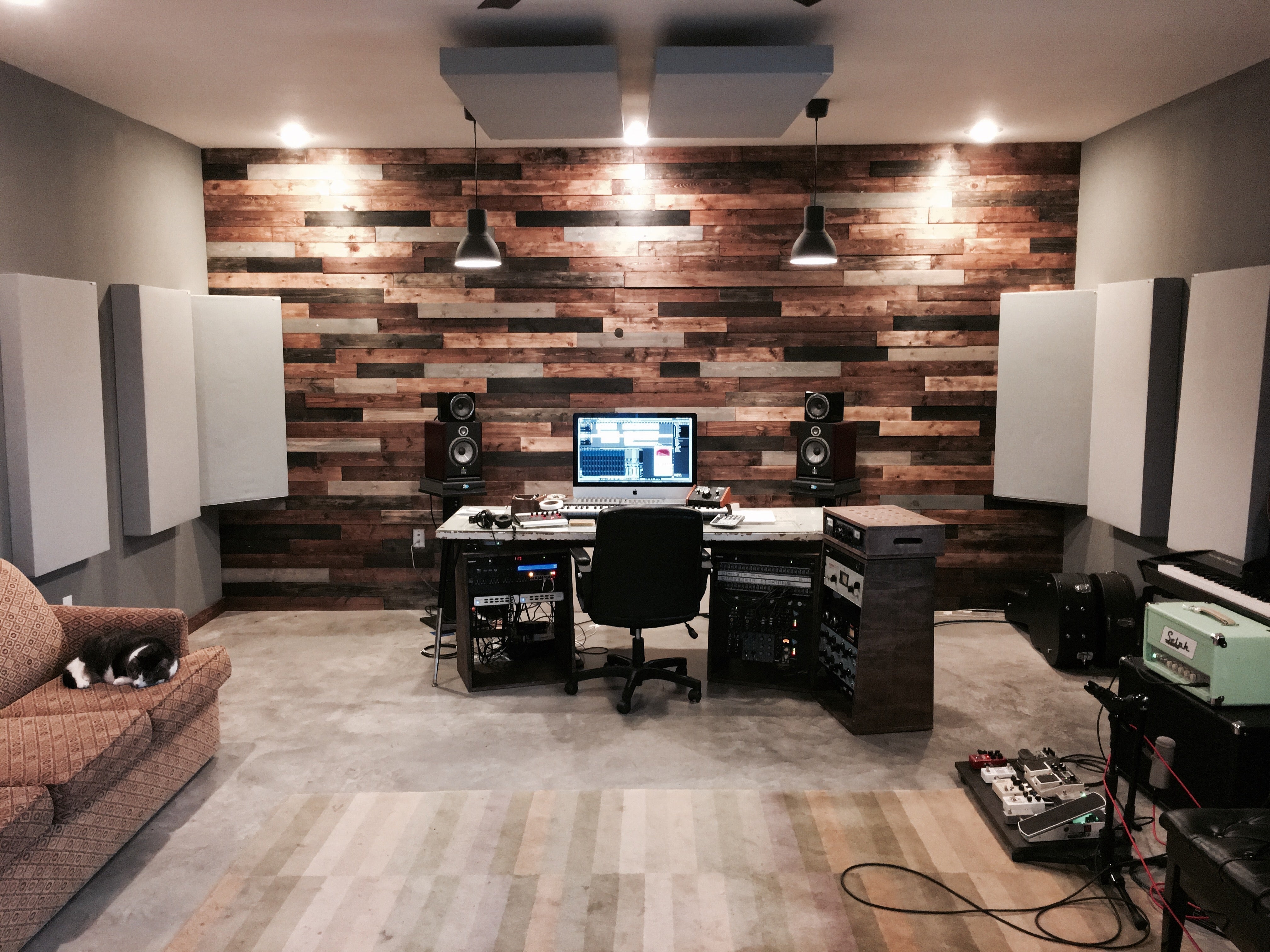
Early reflections are one of the most important and least well‑understood aspects of room acoustics. They are also among the easiest problems to hear once you know what to listen for, and among the most effective to fix with the proper acoustic treatment.
This article is intended to be a complete, practical reference on early reflections. Not just definitions, but why they matter, how they affect sound quality in real rooms, and how to treat them correctly in listening rooms, home theaters, home studios, podcasting studios, tracking rooms, and recording studios.
What Are Early Reflections?
Early reflections are reflected sound waves that reach your ears shortly after the direct sound from the loudspeakers or a performer. In most rooms, this means reflections arriving within roughly 30–40 milliseconds of the direct sound.
The exact timing matters because your brain has not yet fully separated the original sound from the reflected sound. Instead of hearing them as distinct echoes, you listen to them as a single, blended event. The sonic characteristics of the sound also affect our perception of it. For instance, staccato sounds of short duration (like a drum hit) are easier to perceive as distinct from one another compared to a more legato sound source with a smooth attack and decay.
These reflections typically come from the nearby walls, most often the left wall and right wall in a listening environment, as well as the ceiling and sometimes the floor. In a small room, reflections from the back wall, and in some cases even the front wall, can also arrive early enough to contribute to the problem.
You will see many overlapping terms used to describe these reflections:
- First reflections
- First reflection point
- Reflection points
- Side wall reflections
- Mirror points
- Second reflections
These terms are not always precise and are used differently by different people or communities. In some descriptions, first reflections refer to the closest loudspeaker reflecting off the nearest wall, while second reflections describe the opposite loudspeaker reflecting off that same wall. In practice, all of these fall under the same functional category: early reflections. What matters is not the label, but the timing and strength of the reflected sound.
Direct Sound vs. Reflected Sound
When sound leaves a loudspeaker, some of it travels directly to your ears. This is the direct sound, and it carries the most accurate information about level, timing, and direction.
At the same time, sound reflects off hard surfaces like drywall, ceilings, desks, and windows. Sound reflects because these surfaces do not absorb much energy. The reflected sound then arrives at your ears from different directions, slightly delayed because the reflected sound has a longer distance to travel before arriving at your ears.
Your auditory system evolved to localize sound sources in complex environments, but it relies heavily on the earliest arrivals. When multiple similar sound waves arrive within a short time window, localization becomes less precise. The result is not subtle, but because it happens in all untreated rooms, we tend to normalize this sound. Often, listeners experiencing a reflection-free zone in a listening room for the first time can't believe what they are hearing.
What Early Reflections Do to the Sound
Collapsed Stereo Imaging and Soundstage
Early reflections interfere with your brain’s ability to pinpoint where sound is coming from. Instead of hearing a stable image between the left speaker and right speakers, the image becomes vague and smeared.
This directly affects stereo imaging, soundstage width and depth, and your ability to place vocals and instruments precisely within the mix or listening space.
In a high‑end listening room or mix position, this loss of precision makes critical decisions harder. In a home theater, it reduces clarity and realism. In a recording studio, it limits how accurately you can judge performances and balances.
Comb Filtering
Early reflections also create comb filtering. This happens when the direct sound and reflected sound combine at your ears with minor timing differences.
Some frequencies reinforce each other. Others cancel out. The pattern looks like the teeth of a comb when measured, hence the name.
Comb filtering creates a series of very narrow peaks and dips in the frequency response, most notably in the midrange, where our hearing is most sensitive. The result is added harshness and glare, reduced tonal accuracy, and a sound that becomes less pleasant and more fatiguing over time.
This is one reason untreated rooms often sound fatiguing even at moderate levels.
Recording Problems: Vocals and Instruments
In a recording studio or home studio, early reflections affect what the microphone hears the same way they affect what your ears hear in a listening or control room.
Reflected sound reaching the microphone adds excessive room tone, introduces comb filtering into vocals and instruments, and reduces both clarity and intimacy in the recorded signal. This often forces engineers into extreme close‑miking just to avoid the room, which limits microphone choice, placement, and creative options. Treating early reflections opens the door to better‑sounding recordings with more natural depth.
Reflection Zones, Not Just Reflection Points
It is common to talk about the first reflection point, but this can be misleading.
Yes, there is a specific geometric point at which sound from a speaker reflects to your listening position. You can find it using the mirror trick: sit at the listening position while a helper moves a mirror along the wall. Wherever you can see the loudspeaker in the mirror is a first reflection point.
This is a helpful technique, especially when you are placing a small number of panels.
However, sound does not behave like a laser beam. Reflections spread out. They occupy areas, not dots. This is why we prefer to think in terms of reflection zones.
Between the speakers and the listening position, the side walls and ceiling form zones where early reflections are strong. When it comes time to treat them, coverage area matters more than surgical precision.
If you are just getting started and only have one or two absorption panels per surface, accurate placement at the reflection point is critical. As you add more treatment, covering a broader area becomes more effective and more forgiving.
How to Treat Early Reflections
Absorption: The Most Accurate Solution
Which acoustic panels are best to deal with early reflections? For maximum accuracy, we recommend broadband absorption panels in early reflection zones—the broader the band, the better. Thicker panels extend performance further into the bass range, which brings additional improvements.
Absorption removes energy from the room in these early reflection zones. That means less reflected sound reaching your ears, a cleaner, more dominant direct sound, reduced midrange comb filtering, and a more stable, precisely defined stereo image.
Thickness matters. Thicker absorbers extend performance into lower frequencies. This is not just about corner bass traps. Thick broadband absorption at reflection zones also helps clean up upper bass and low midrange buildup, which contribute to muddiness.
Well‑designed absorbers typically use fiberglass or rockwool as the core material. These materials convert sound energy into heat through friction as sound waves pass through them. Compared to thin acoustic foam, they offer actual broadband absorption.
Diffusion and Hybrid Devices
In some rooms, absolute accuracy is not the only goal. Listening rooms and home theaters often benefit from a sense of spaciousness and liveliness.
In these cases, diffusion or hybrid diffuser panels can be used in early reflection zones, particularly when the room is large enough to support them.
Diffusers scatter sound instead of removing it. This reduces localization problems without making the room overly dry. Hybrid devices combine diffusion with absorption, offering a balanced result.
The choice between absorption, diffusion, or a combination depends on:
- Room size
- Listening distance
- Intended use
- Personal preference
In tiny rooms, absorption is usually the safer and more predictable choice.
What Changes When Early Reflections Are Controlled
As early reflections are brought under control, the room begins to get out of the way of the loudspeakers. The haze created by overlapping arrivals fades, leaving the sound you hear anchored to the speakers themselves rather than smeared across the room. Tonal roughness in the midrange gives way to a smoother, more natural presentation, and details that were previously masked become easier to follow. Imaging snaps into focus, with instruments and vocals occupying clearly defined positions rather than drifting or blurring together. The soundstage feels stable and intentional, allowing you to relax into the music or the mix without strain. Over time, this reduction in confusion and harshness translates into a listening experience that feels calmer, more precise, and far less fatiguing, even during long listening sessions.
This is often one of the most immediately audible improvements people experience when applying proper acoustic treatment.
Getting Started
Every room is different. Speaker placement, listening position, room dimensions, and surface materials all affect early reflections.
The best way to get a treatment plan that fits your room is to start with GIK Acoustics’ Free Acoustic Consultation. You can upload photos, describe your setup, and get guidance tailored to your space and circumstances.
Early reflections are not a subtle detail. They are a defining factor in how trustworthy your room is for listening, mixing, and recording, and in how we experience music. Addressing them correctly is one of the most effective upgrades you can make to your room acoustics.
To get started, visit gikacoustics.com and fill out the Free Acoustic Advice Form. This will get your room’s info over to us and onboard you with a GIK Designer, who will help you identify the right approach for your listening room, home studio, home theater, or recording studio.



Share:
GIK Acoustics at the University of Salford: Why Independent Testing Still Matters
Mounting GIK Acoustics Products in Corners